Oenobareus

From the Greek meaning 'heavy with wine'
A blog devoted to science and reason
Written after a glass or two of Pinot Noir.
Showing posts with label tax. Show all posts

Saturday, May 25, 2013

I Didn't Win $600 Million.

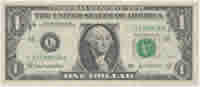
Here is my ticket for the May 18 Power Ball lottery.  Here are the winning numbers: 10 12 14 22 52 and the Power Ball was 11. You can see I didn't pick one number correctly.


Being the geek that I am, I immediately wondered what the probability was that someone could pick six numbers and not get one right.


Calculating the probability is simple.  The probability is just the number of desired outcomes divided by the total number of outcomes.  Now it gets a bit more complicated if you haven't had a statistics course.


In the Power Ball lottery, there are white balls numbered 1 through 59 and red ones (the Power Balls) numbered 1 through 35.  We need to know how many possible drawings there are.  In the vernacular of statistics and probability, we want the number of possible combinations.*


Let's first calculate the number of ways there are to pick 5 numbers out of 59. 


The ! means factorial; that is 5! is 1 X 2 X 3 X 4 X 5. The answer is 5,006,386.There are only 35 ways to pick one number out of thirty-five. So the total number of combinations is 5,006,386 X 35 = 175,223,510. Because there is only one winning combination, the probability of winning is 1/175,223,510.


In order to pick not even one number correctly, we need to exclude the 5 correct white balls and then calculate the number of ways to pick five numbers out from 54 white balls.

This equals 3,162,510.  Then multiplying by 34, the number of non-winning red balls, yields the number of combinations with no correct numbers. 107,525,340.


Now we're ready.  The probability of picking six numbers in the Power Ball lottery and not having a single one correct is 


Pretty damn likely, isn't it.


Let's go back and examine the likelihood of winning.  One chance out of 175.2 million.  Suppose every adult in the US bought a Power Ball ticket. That's 192.9 million people. This means that if every adult played, there's about a 90% chance that someone will win.  The actual probability that someone will win is much less, since only 32 states plus the District of Columbia and the U.S, Virgin Islands participate. 


Unfortunately, the numbers don't lie. That winner will never be me or you.  


Not winning may be the best thing to ever happen to us though. The National Endowment for Financial Education estimates that 70% of those who enjoyed quick wealth lose that money within several years.


It's not even a good deal for the states. The lottery turns out to be a regressive tax, a tax that hits the poor the hardest. In most, if not all, lottery proceeds are meant to be spent on education.  Yet in California, lottery revenues in 2010 added only 1.3% to the education budget.


So I only play when the jackpot hits enormous numbers and then I buy one ticket.  You know the difference between buying one Power Ball ticket and buying ten?  You're out $18 more when you buy ten.


* If the order in which the balls are picked made a difference, we would need to calculate the number of permutations.  In the May 18th Power Ball for example, it didn't matter that the 22 ball was picked before the 10 ball.


Friday, January 20, 2012

Math and Taxes


There's been quite a lot of news coverage on what Presidential candidates pay in income tax.  This got me to thinking about what I pay in taxes, not because I don't like paying taxes.  I really do enjoy it. My money paves the roads I drive on. It makes the skies safe when I fly (it also pays the salaries of the sometimes surly TSA agents).  It provides affordable education to the nation's students, and it provides a little financial security and healthcare to seniors.  These are a few of my favorite things.

Mitt Romney says that his effective tax rate is about 15% while Newt Gingrich's tax returns shows his is 32%.  Calculating  the effective tax rate is easy, but before I cover that, let's explore the federal tax rates for 2011.  Here are the federal tax rates for 2011.

I remember an urban myth about these tax rates.  I haven't heard it recently so maybe this is one myth that has finally died.  The myth says that if a person was near the top of one tax bracket and got a raise that bumped that person into the next bracket, the person would end up taking home less pay than before.  But that's not how these brackets work.  UPDATE: USA Today published an article on Sept. 2, 2011 that contained this error.

Let me illustrate.  Suppose a single woman earns $34,100 in 2011.  I mean for this amount to represent her taxable income; basically, taxable income is your income minus personal exemptions and deductions.  The first $8,500 is taxed at 10%, so she pays $850 to the IRS.  She is taxed at 15% for only the difference between $34,100 and $8,500.  So, the tax on $25,600 is $3,840.  Her total tax liability is then $4,690.

To find her effective tax rate is really simple.  Take the total amount of taxes paid and divide by her taxable income.  Here, $4,690/$34,100 = 0.138 = 13.8%.

Now suppose she gets a raise (in this economy?), and her 2012 taxable income rises to $35,700.  The 2012 tax brackets have been inflation adjusted.

So next year she can expect to pay $870 (10%) on $8,700, $3,997.50 (15%) on $26,650, and $87.50 on $350.  Her 2012 taxes will then be $4954.50, and her effective tax rate will be $4954.50/$35,700 = 0.139 = 13.9%

According to my 2010 return, my effective tax rate was 19.1%.  

With all the talk about the 99% and the 1%, I wonder where I am.  I earn a 'nice dime.'  I found a % calculator on the Kiplinger website.  Kiplinger is a financial advice and forecast business.  It figures that I'm in the top 10% of American wage earners.

So I played around with it.  To be in the top 5%, you need an income of $175,000.  The 1%?  $350,000.  

When I was much younger, I would tell people that I wanted to earn a comfortable living.  They'd asked what comfortable was.  The smartass that I am replied that if I could lose half of my income and still be comfortable, that was a comfortable living.  If I earned $350,000 and lost half of that, could I still be comfortable?  

Wouldn't I like to try!


[N.B. Here are the tax brackets from 1919 to 2011.]